Showing posts with label food. Show all posts

Thursday, February 9, 2012

Re-grow Your Green Onions!

Who knew? We use these so often, but only a little and most it of goes to waste. No more! You apparently can do this once or twice. Saves money and waste! yay! Sorry about the bad pick, it's from my phone. Just stick in water and put near a window. Refresh once in a while. Easy-peasy!

Sorry it's short and late, but 2012 has been insane! More to come on why--once we finally have time to wrap our heads around it :)

Peace!

Sunday, May 15, 2011

Fifty-Six - Garden + Composting Expansion!

Guthrie and I got our seeds from the local food resource hub. For $10, we received more than we needed, so we were able to share with friends. We also received little plants like broccoli and cabbage in the first batch and tomatoes and eggplant in the second.

My first week off, I worked hard to complete the new raised bed with wood recycled from the our old box spring. This year, we are definitely doing something different. The garden is much bigger, and we are expanding what we are growing. We are still trying to keep it simple, using ideas from the Square Foot Gardening method from the book with the same name. I would love a copy of the book, and was only able to have it one hand for three weeks because there were many people waiting to read this book at the library. Still, I learn a lot about when, where, how deep, how far apart, how many plants two people really need, etc.

We are also turning into composting fools. The worms are doing well, but we are no longer composting in the backyard. Honestly, pallet composters or the nice ones you buy work much better and are easier to turn. Instead, we are able to bring anything the worms won't eat to Paradise Community Garden to put into their bins (they have four!). They are able to turn out compost much faster and definitely need it in the garden.

So, many of the seeds are planted (the rest tomorrow when the soil is a little drier), the compost has been added, the beds are weeded, waiting for sprouts (and trying to keep the bunnies away!). Hopefully we will have some wonderful, very local, organic produce in a couple of months. Yum!

Peace!

Friday, May 13, 2011

Shout Out: Beez Kneez!

Check this out: The Beez Kneez. It sure is. Kristy Lynn, cyclists, beekeeper, and Minneapolitan delivers raw honey to your doorstep--dressed as a bee!

This is what she's got for you:

Clover/Basswood Honey
  • 12 fl oz jar (1.12 pounds honey): $6
  • 32 fl oz jar (3 pounds honey) : $15
Buckwheat Honey
  • 12 fl oz jar (1.12 pounds honey): $7
  • 32 fl oz jar (3 pounds honey): $18
Both are AMAZING! The bees work at the Bar Bell Bee Ranch in Squaw Lake, MN. The clover/basswood is sweet and smooth and the buckwheat (to quote a friend) is "farmy" and rich. Check out her website for pictures, info, pricing, and an order form. If you live in Minneapolis, she'll come to your door. If you don't, let me know and I can order you some. Our first order we were taking a much needed nap and missed her! I can't wait to see her buzzing by the next time with some more honey. I'm buying big jars next time!

By the way, I am done with the licensure part of grad school :)

Peace!

Sunday, March 27, 2011

Forty-Nine - Minneapolis Local Food Resource Hubs Network

For $10, Guthrie and I have joined and registered our garden through the South Minneapolis Hub. I pilot program through the City of Minneapolis and Gardening Matters -- a local non-profit community to strengthen community gardening in the Twin Cities. The mission of the Hub is to support "Minneapolis residents to grow, preserve, and cook their own fresh produce." For $10, we get seeds, seedlings, classes at a discount, and are connected with other gardeners in our area. It sounded like a great way for Guthrie and I take our garden to a new level, and really get ready for a full season of planting, weeding, and harvesting (I hope!). There are currently three Hubs you can join in Mpls - Powderhorn-Central (woohoo!), Philips-Ventura Village, or Northside. To learn more, and download the order form here. We'll keep you updated with pictures of seeds and sprouts as we get back to gardening. Tough to think about with the new snow fall that has re-covered our garden, but we are very excited for spring!

Peace!

Wednesday, March 2, 2011

Fourty-Five - CSA!

Farmer Kate -- from her website
Sorry this is a few days overdue. Guthrie and I have been working hard doing our research, asking for recommendations, and seeking out friends to find the right CSA for us. We are choosing North Creek Community Farm in Prairie Farm, WI.

Community Support Agriculture (CSA) is growing in popularity as people are realizing the importance of knowing where our food comes from and supporting local farmers. What is a CSA? Here's the deal (from Local Harvest): a farmer offers a number of "shares" to the public. It's usually a box of produce, but some farms offer cheeses and meat and dried meals for over the winter. Consumers buy a membership or a subscription in order to receive these boxes of happiness each week throughout the farming season. Of course, paying a farmer is not a guarantee. You are making an investment in the farm, and what you receive sometimes depends more on the weather than on what the farmer has planned. Generally it's 15-18 weeks of produce in Minnesota. Most farmers deliver to multiple drop off sites--sometimes a store, sometimes someone's house. Our site is three blocks from our house--perfect. For more information or for starting your search on a CSA, take a look at the Local Harvest website.

What's included in our CSA? Tons!

  • weekly fresh, organic vegetables
  • a variety of fresh herbs
  • bouquets of fresh flowers
  • Weekly newsletter with seasonal recipes and tips
  • invites to the farm and its seasonal festivals

I used the awesome list serve for connecting neighborhoods called e-democracy to put out an "ad" for a CSA buddy. We have connected with a family who live in PoHo and they are willing to share the share with us. This is also working out well because we will be able to to connect and meet another family in our neighborhood. It is not 100% official, still waiting for the deposit from the neighbor, but I wanted to post this. If it falls through, I promise, we have a back up. I'll keep you posted. Until then, we are optimistic and can't wait for the first drop off!

Peace!

Wednesday, January 5, 2011

Thirty-Eight - No Impact Week: Food

Alright -- we had to make a list of everything we ate yesterday to prepare for today. We went out on a double date to Red Stag Supper Club's cheap date night. The owner also owns the Bryant Lake Bowl (probably my favorite spot in Mpls) and Barbette (had brunch there just before Christmas). Red Stag is the first LEED Certified restaurant in MN and like it's companion restaurants, is dedicated to local, organic food and earth-friendly practices. Read more about it here.

Guthrie
2 homemade blueberry muffins
2 organic granola bars
Amy's Bowl Frozen Meal: Mexican Casserole
@Red Stag Supper Club
   cheese place
   grilled top sirloin with red pepper and onion hash
   raspberry mousse with spongecake

Laura
2 homemade blueberry muffins
1 organic granola bar
1 La Croix sparkling water
Leftovers - homemade mock duck, bok choy, & broccoli stir fry with soba noodles
@Red Stag
   cheese place
   grilled top sirloin with red pepper and onion hash
   raspberry mousse with spongecake

Steps for today:
1. Calculate our "foodprint". This was impossible, since nothing we ate really came up, and it didn't take into account that 3/4s of what we ate was organic, and about 1/4 was local (MN or WI) and 1/3 was local (Midwest) and everything else came from elsewhere in the US. 

2. Change our diet. Honestly, we did not do much to change our diet. We shopped at the co-op as per usual, got as many P6, local, and organic items as possible, the Red Stag is awesome, and we try to cook from scratch (like the muffins and stir fry) as much as possible. Lunch today was local pita and hummus from Holy Land with fresh organic veggies. 

3. Go to farmers' markets and have potlucks. This is a bit of a an Achilles heal for us--we LOVE eating out. We love eating in and cooking meals; we just LOVE good food. Though, I think we should definitely up our potlucks. This is actually spawn me to organize one for this month... (starting to plan) :)

4. Keep track of your food choices this week and reflect. 

5. Write down five things we are grateful for (I think this is a theme...)
   1. A good shovel
   2. The opportunity to volunteer
   3. Mexican food (what we're making tonight!)
   4. Public radio
   5. Public transportation (we both took it today). 

As far as tips, there are some good ones that we try to live by as well as some new ideas for us. Of course, going meatless is a great idea. Trying to have vegan days is also a great idea. I am hoping that when I graduate and we go back to a more normal cooking schedule, that we will deliberately incorporate vegan days into our flexitarian lifestyle. They have a great meat buying guide which you can download here

The new idea that we will use is when buying seafood, you can text FISH and the name of the fish to 30644. The reply will provide info about the sustainability of the fish from BlueOcean.org.

I tested it with something that I know is sustainable: Alaskan salmon. The response I received was:

(GREEN) high abundance due to good management; most are caught using purse seines, followed by gill nets and troll gear; cause little habitat damage and moderate levels of by catch. Cool. (I added that last part). This information is based off of the Smart Seafood Guide from Food & Water Watch. This is great when I forget to carry the Seafood Watch pocket guide with me (you can get an iphone app here as well) and forgot when my father ordered Chilean Sea Bass at an Shuang Cheng with me and I even enjoyed sharing it with him! It was very embarrassing, and we talked about it later. He now calls me up with questions, but it's nice to have this tool always with me as I go. 

Check back tomorrow for "Energy".

Peace!

Sunday, November 7, 2010

Twenty-Nine - Local Beer

Keepin' it local can be hard when you are a fan of tasty, discussion-promoting brew. There are so many great microbreweries churning out thoughtful brews that the locavore mentality Laura and I have adopted is often hard to maintain. We know that beers are high maintenance products that often travel long distances (especially if you live in the midwest) to get to your hand. In the west, particularly Oregon, Colorado and California and in the east, particularly Delaware, Vermont and Maine, produce bountiful amounts of beer that get shipped all over the USA especially to areas like Atlanta, Georgia where beer consumption is high but local production is low (Georgia brew production and distribution info here).

Here's the deal: Laura and I need to either make our own brew and/or be content with the beer produced locally. By local we mean that all stages of the beer making and distribution processes are done in one of the Midwest states. However, the ability to drink within state and even in the metro area is becoming less of a problem with the increasing amounts of breweries popping up in the Twin Cities (Surly, based in Brooklyn Center, is a good example, which is hip to the square and actually offers great brew, even recently being name best brewery in America according to Beer Advocate.) Additionally, there has been an influx of breweries throughout the state putting out growlers over the last couple of years, and, thanks to a new microbrew-friendly Minneapolis ordinance Minneapolis brew esthete's have been allowed to sell these 64 ounce jugs of the fun stuff. Another great thing happening in the Twin Cities is the comeuppance of craft brew stores like Four Firkins and Wine Thief & Ale Jail that not only sell great brews elsewhere in the nation but local brews as well.

Source: http://bit.ly/9DzdcP

Even if Laura and I only drink locally we will still produce a lot of waste--recyclable, however--through the purchase and usage of bottles. It's too expensive, time consuming and limiting to only drink while dining out. The other issue is where the ingredients (hops, barley, wheat, malts) to make the brews (whether by myself or by local breweries) come from. The 100 Days Without Oil blog poses this question and lists most, if not all, of the local breweries and vineyards in Minnesota. Unfortunately, this would require one to either call up the brewpubs and breweries to find out the source of their ingredients. Plus, given the continental climate in Minnesota, many ingredients are shipped in from elsewhere. Although, during a Summit brewery tour in August, Laura and I found out that Summit's beer-producing practices are sustainable in many respects. Some of the grains used are purchased locally and when spent are sent to local chicken feedlots. This is something that you can't find out about online, rather only when talking to Summit workers can this information be found out. Local ingredients is something that has yet to be used by many local brewpubs and breweries but will soon enough be the case as many, even beer esthete's, attempt to completely localize their beer making and drinking experience.

So, what, exactly, have we committed to do? We have committed ourselves to only drink beer from the Midwest when purchasing at stores and will drink brews from anywhere only by tap when out and about. I have also committed to start brewing my own beer before year's end, hopefully replacing most of the beer that I purchase from stores. There are some local, wine making and home brew making stores that I could avail myself of. Here's a short list:

Northern Brewer
Midwest Homebrewing Supplies
Brew & Grow
Barkingside Co.

Also, here are some links to Minnesota beer and wine info, home brewing associations and organizations and a brew beer or wine-on-the-premises joint:

MNBeer
MN Craft Brewer's Guild
MNBrewers
Vine Park Brewing Co. (DIY) 

Also, here is a short list of local breweries and brewpubs in the Minnesota:

Minneapolis Town Hall Brewery (soon to open another location in South Mpls)
Flat Earth Brewing Co.
Great Waters Brewing Co.
Surly Brewing Co.
Brau Brothers Brewing Co.
Lake Superior Brewing Co.
Lift Bridge Beer Co.
Barley John's Brew Pub
Fitger's Brewhouse
Boathouse Brewpub & Restaurant

I don't know if I will be making my own wine anytime soon but there will be a post about that and local winemakers in the future.

Here's to a tasty drink!

Sunday, October 24, 2010

Twenty-Seven - Halloween Candy

This year will be our first year with real potential of having trick or treaters. I'm excited, but at the same time, not excited about having to go to Target (which we are boycotting due to the money given by Target Corp owners to an anti-gay agenda--find out more at the Human Rights Campaign) and buy a bunch of candy, wrapped individually in lots of plastic, with the chocolate industry how it is (deforestation, sustainability issues, child labor), and all of the issues with childhood obesity, etc, etc! MPR recently dedicated an entire hour to chocolate industry.


Still, I don't want that from discouraging Guthrie and me from participating in this fun, American past-time. When at Seward the other day, they had an awesome end of the aisle displayed with a creative answer -- and it does not mean that we have to hand out dental floss and be the house that the kids quickly learn to avoid. Besides the sustainable and organic chocolate, they had one of my favorite treats, fruit leather, on display, as well as fall themed fruit snacks. They are sugary, but not nearly as much as the chocolate and hard candy they will be eating, they have no artificial sweeteners, and they have some nutritional value, unlike a 3 Musketeers. The Annie's Bunny Fruit could also be used in Easter Baskets :) If you want some (I love fruit snacks!), come trick or treat at our place on Halloween.


According to The Green Year, Americans spend $21 million on Halloween candy every year--more than on Easter and Valentine's Day combined. Think about all of the waste created from the little wrappers. If you don't want to be the house with the organic stuff, you can give out candy like Dots or Nerds with cardboard containers that could potentially be recycled and are a least decompose faster if throw away. You could also be that cool house that gives away cans of pop -- that can be recycled. Maybe even put a note in a sharpie reminding kids to recycle their cans. 


Peace!

Sunday, October 10, 2010

Twenty-Five - Bulk Buying + More Ways to Save on Food Waste

Even though Guthrie and I use the bulk bins at the co-op, we really aren't making a huge commitment to bulk buying--until now. When Guthrie and I go to the bulk bins, we almost always reach for those plastic bags and stickers or twist ties. No longer. We have been saving just about every jar that comes through our house and are using those instead for bulk buying nuts, seeds, sugar, flours, spices, tea etc. If we need stuff in bulk, we now bring in the jars, containers, jugs, etc and weigh them, mark the weight, fill and then the cashier will subtract the weight from the jar automatically.

For something we have been doing that I would like to share is for those of you who, when shopping for produce, wrap everything in a plastic bag. Guthrie and I either don't bag our produce or use reuseable mesh produce bags. 100 Days Without Oil blogger Molly Eagan puts this quite nicely:

"I think some people must think it is gross to just throw the produce into the basket and then put it directly on the belt when checking out.  OR, people think that the checkout would PREFER that you bag things.  This probably isn't the case because they have to find the sticker and count the number of items in each bag, which is more difficult when in bags. Produce certainly doesn't go directly from a plant to the grocery bin. Lets consider for a moment how many different surfaces your produce has touched before it go to you:

(1) hands picking produce at harvest
(2) hands and boxes sorting produce 
(3) hands and boxes for shipping
(4) hands and boxes for storing
(5) hands and grocery surfaces (maybe even the floor if dropped) when placing in display bins for purchasing
(6) LOTs of hands picking through produce at the store

So, maybe it isn't such a big deal if that tomato isn't wrapped in plastic to go from the bin to the checkout-and, it will save you a bag."
~~~~~

Guthrie and I have made a pledge to cut down on our food waste. One of the most frustrating things for me is throwing away food that was once perfectly delicious. Composting should not give us an excuse to throw away, but is a tool to reuse our food scraps and a safeguard against wasting food, and should not be overused as a safeguard.

Use it up, wear it out, make do, or do without -- is a mantra we are really trying to incorporate into our lives. Use it up is perfect in the case of food. To put this into perspective, first some facts:

Timothy Jones of the University of Arizona food loss studies says that 50% of all of the food in the United Staes is wasted. It rots in fields when prices are low, it is thrown out in supermarkets when it's past its prime, it thrown out in huge amounts from fast-food restaurants after sitting under heat lamps for too long. At home, we Americans waste on average 14% of our food. This is about $600 worth of waste per year for the average family.* It's so easy to let those leftovers go bad or to ignore those oranges that were so yummy when you first wanted them, but now aren't really what you are craving. But to save money and energy, we need to be conscious of what is in our kitchen and how we use it.
*Info from Planet Green

Here are some tips we are trying:

- Buying produce can be difficult when cooking for only or two. Do you really need all of the celery? That obscure salad dressing you only need for one recipe? Hit the salad bar. Buy what you need, get it weighed by the pound, and cut back on waste. (this of course is only less expensive in small quantities, but if a small quantity is what you need, it's what you should buy).

-We will start saving the trimmings from carrots, celery, green onions, corn cobs, cabbage cores, etc, and store them in the freezer in a tupperware (see left). Once we have enough, we will add them to a pot of water and make homemade vegetable broth -- something we buy often -- thus saving us money!

-bananas turning brown? throw them in the freezer for making banana bread later

-turn old bread into bread crumbs or croutons

-can't get through all of the bread? freeze parts of it right away and thaw as needed

-put greens in a vase with water instead of in the fridge -- they last longer and look pretty!


~~~~~
Finally, though not related to cutting back on food waste, but related to food, I need to make a plug for the Pumphouse Creamery on 48th and Chicago! We finally went there today and it was wonderful!  They use many local and organic ingredients and the ice-cream we had today was perfect for this beautiful summer surprise of a day: pumpkin ice cream made with pumpkins from the St. Paul Farmer's Market and local apple ice-cream with caramel swirl--yum!

Sunday, September 5, 2010

Twenty - Food Preservation: Freezing

Renest had a great post about reconnecting with the skills our grandparents possessed, but that sadly, with modernization, these skills were almost lost with the next. I know with the green movement there are many cooking from scratch and growing their own gardens, but what happens when the garden grows well and we are left with too much?

We can eat scalloped tomatoes until we a blue in the face, or give away food to family and friends, but we can also can and freeze so that we can enjoy some of the wonderful local goodness when the snow covers the ground (wow, I don't even want to think about it).
Canning, sadly, seems like a scary endeavor to me. There are many steps and one slip can spoil everything -- literarily. I hope to have a post someday about my adventures with canning, but that may have to wait for next summer when our garden is bigger and our need is greater.

Instead, we will freeze. I feel that I have never learned to utilize my freezer. Now we are freezing milk and stalking up on things like bread when they are on sale, but that's about it. (Of course, there are always Amy's Bowls and a frozen pizza, but that's not quite what I mean.) So today I start. I am making a batch of tomato sauce from scratch and am going to freeze it. Yum!

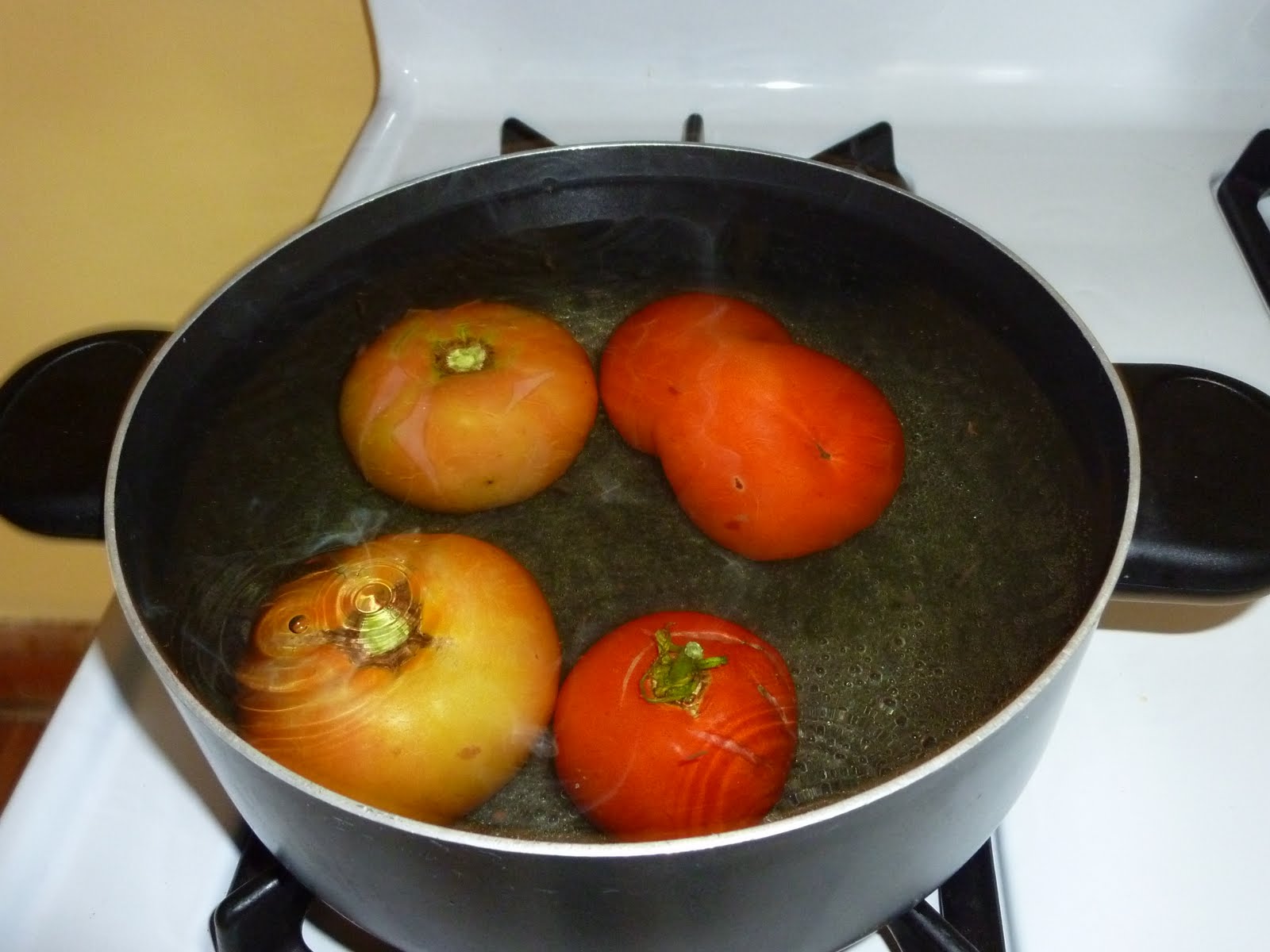
First I have to skin and seed the tomatoes. There are simple directions here if needed. Then you make the sauce! I am going to make plain sauce so that I can change it up and add to it when I make unfreeze it for meals later. When it's done, I put it into a plastic bag and put in the freezer! Make sure you label it and put a date. It will last about three months. Here are some tips and recipes for a fresh tomato sauce from the Smitten Kitchen. Deb really puts my pictures to shame, but she is really in the business of food porn. :)

Putting the sauce in the freezer is also helping to make our freezer more efficient. From The Green Year by Jodi Helmer again, your freezer and fridge are responsible for up to 1/6 of the energy used in your home. I definitely believe that here in the apartment. Keeping the freezer full actually helps to increase its efficiency because there is less space to trap the warm air that enters each time you open it (though not true of a full fridge--overstocking a fridge is less efficient). Since we are not just going to run out and buy 100 frozen pizzas (though Guthrie would not object to that), we are going to add a couple of jugs of distilled water we have left over from a botched detox attempt (you can see a jug in the picture below).

Also, remember the milk carton ice block idea? Guthrie and I walked to a friends for dinner last night (thanks, Aaron!) and used the ice block to keep the cheese and wine chilled on the steamy trek across the park.

Peace!

Sunday, August 22, 2010

Eighteen - Green Travel

Guthrie and I are about to head out to Austin, TX this week for our anniversary. Labor Day, we are driving to Des Moines, IA to visit with friends and family. In October, Guthrie is off to Montreal (jealous!) for work. With all of this travel, how do we still be good to Mother Earth?

Before you leave:
  • Unplug all electronics
  • Lower or turn off any heating and cooling devices

Flying? Here are some tips:
  • Pack only what you need, don't bring extra weight
  • Most of the energy is used in take off and landing -- take a direct flight whenever possible. We are flying to San Antonio to avoid this and driving a compact car the hour to Austin
  • Take a train! It could reduce your CO2 emissions by 90%
  • Reuse those quart sized baggies -- we have two that we reuse over and over again for flying
  • Reuse little plastic containers -- pack your own shampoo, conditioner, toothpaste, contact solution and all of those other liquids and gels with buying new ones. We have a little travel basket in our hallway closest where we save these things just for this reason
  • Cook when possible - we are renting a small cottage where we can stop by the farmer's market or co-op to get food and prepare it ourselves during the day
  • Bring a water bottle! Just because you're away doesn't mean you throw your eco-lifestyle out the window

Driving? Here are some tips:
  • Check your tire pressure
  • Make sure the vehicle is properly serviced
  • Look into ways to offset your carbon footprint as we did with Enterprise when we had to give in and rent our first car
  • Leave the car at the hotel and walk, cycle, or use public transportation -- we'll be on the bus in Austin!
  • Pack only what you need -- don't bring extra weight 
  • Plan ahead -- it helps avoid getting lost and driving around
  • Try to avoid sudden acceleration, engine revving, and sudden braking - it can use up to 30% more fuel. Keep you eyes on the road 3-4 cars ahead
  • On the highway, drive with the windows closed to reduce the drag (though this brings up the AC v. windows down issue, find a balance)
  • Don't idle
*info from Carbon Footprint

Where to stay?
The most eco place would be a campground; however not always the easiest and best choice for every vacation. We looked into it for our Des Moines trip when the friend were were going to stay with had flooding in her house, but, again, with recent rains and flooding, ever close campsite is sadly closed. Instead, we started looking at Green Hotels which is a guide to find hotels that have sustainability in mind when making business decisions. Of course, the only one listed was in Cedar Rapids. Strike three. I think we are stuck at a motel. At least we can reuse sheets and towels as much as possible. If you are planning a vacation, a great site National Geographic's Center for Sustainable Destinations.

What to eat? 
Guthrie and I have taken many mini-road trips. When we are hungry, we work hard to pass up the McDonalds (can't even remember the last time I ate something from there...) and all of the other fast food chains. Sometimes, it is unavoidable, and you are hungry, and you would rather use their bathroom than the one at the Citgo...but I digress. Point is: look for those mom and pop shops and support the local economy. Guthrie and I have found some gems, and some scary places -- but they all at least leave you with a story! When in town, continue to support local and independent shops and restaurants. You'll get a better feel for the city and really be helping the local economy. I know we definitely want to do things that will help Keep Austin Weird :-)

Offset your Carbon Footprint
Use a calculator and then offset it! The link is for TerraPass - it's easy to calculate your flight and you can offset it through them or through another organization. Carbon Fund and Native Energy are also really helpful. It's not perfect, but it's better than doing nothing. Money goes to planting trees and conservation efforts and other projects that reduce CO2 in the air.

Some things to keep in mind, I know we will! Happy and safe travels to you!

Peace!

Tuesday, June 22, 2010

Six - Garden

I have a black thumb and Guthrie has two regular thumbs, though neither of us really know much about gardening. My first experience was with a community garden in which I mostly learned that I know zero about gardening. The following year, Guthrie's and my first together, we cut out a little patch in the shared backyard of his apartment. Since we knew we would be leaving for Atlanta mid-summer, we were limited on what we could grow. We planned better and were able to harvest many salads with our lettuce and beautiful edible flowers. In Atlanta, with so much moving and so little green space, we tried once at a potted tomato plant only to have it come down with blight.

This summer, sadly, we are have missed the first couple months already due to the move. Honestly, it's a blessing in disguise because it has helped to stop me from getting too excited about gardening -- my problem before. I wanted to try and plant everything, anywhere I could. This summer, we will start with some pots on the balcony, a small raised bed, and a couple of house plants. If we can handle that, we will be ready to expand next year.

First of all, my gardening bible has been a book some friends gave us as a wedding gift: Garden Anywhere by Alys Fowler. It's amazing! It has topics about indoor plants, dumpster diving, grocery store gardening (like growing an avocado from seed after making guacamole -- this is our baby), you name it! She is a master urban garden with a very sustainable and DIY mentality.


With garden, we started off with planting some herbs for our cute, sunny balcony. It's windy up there, but it's right off of the kitchen, making it a great spot for getting fresh ingredients while cooking. I hate buying fresh herbs at the store: 1. they are super expensive and 2. they are always packaged in so much plastic that you can't recycle. We have now fixed that problem. We bought them from the Gardens of Eagan at the Midtown Farmers Market. For the herbs, we planted cilantro, chives, basil, thyme, rosemary, and pineapple mint. Guthrie picked out the last one :)

Second, I wanted to start small backyard garden, which is hard to do when renting. The solution -- raised bed. They can be removed when you leave, though maybe the next tenants may want it to stay! The wood was recycled wood, old pieces from sister's deck, actually. I found eight pieces (2x6) that were roughly the same size and four that we about the same size as well for the posts. It honestly was my first real experience with a drill. It wasn't anything fancy, and there are many DIY blog posts and YouTube videos that show you how to make nicer ones. I just wanted to wing it, and I think I did a fine job. To fill it, I mixed good organic topsoil with manure 50/50. We planted two tomato plants from the farmers market (determinant -- good for the small garden) and some organic bush beans which we sowed from seeds. I'll post updates as the garden grows.

Hopefully something will grow! Happy gardening! Peace!

Friday, June 11, 2010

Three - Farmers Markets

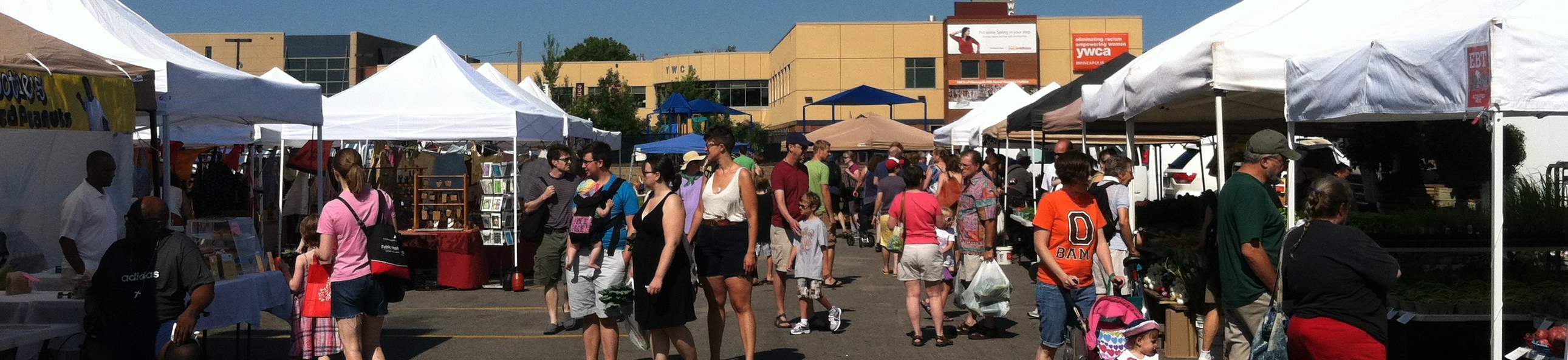
My new Saturday routine - bike with Guthrie to pick up Aaron, and then heading over to the Midtown Farmers Market. I love getting to know the people who grow my food and often times the farmers who contribute to the co-ops are there as well. Farmer's markets are really expanding making it an event--a full on shopping experience. This Saturday, Guthrie and I will arrive early and eat breakfast, have wonderful organic tea and coffee, buy our herbs and plants for the modest garden we will have this summer, and enjoy the people watching. Last week, Aaron went back and forth with a sheep farmer until he tossed Aaron a small package of lamb chops and told him to grill them up and come back to buy more once he realizes how yummy they are. Last night, I had lamb for the first time and felt wonderful about it knowing that I go visit the farmer tomorrow and tell him how it tasted. (Though I don't know if I will ever have lamb again--it's a lot like steak, and I just don't miss that).

There are too many to list -- but find the farmers market near you here.

Are you free on Tuesday afternoon, Saturday morning, or even Sunday morning for Kingfield? Let me know and I will join you!

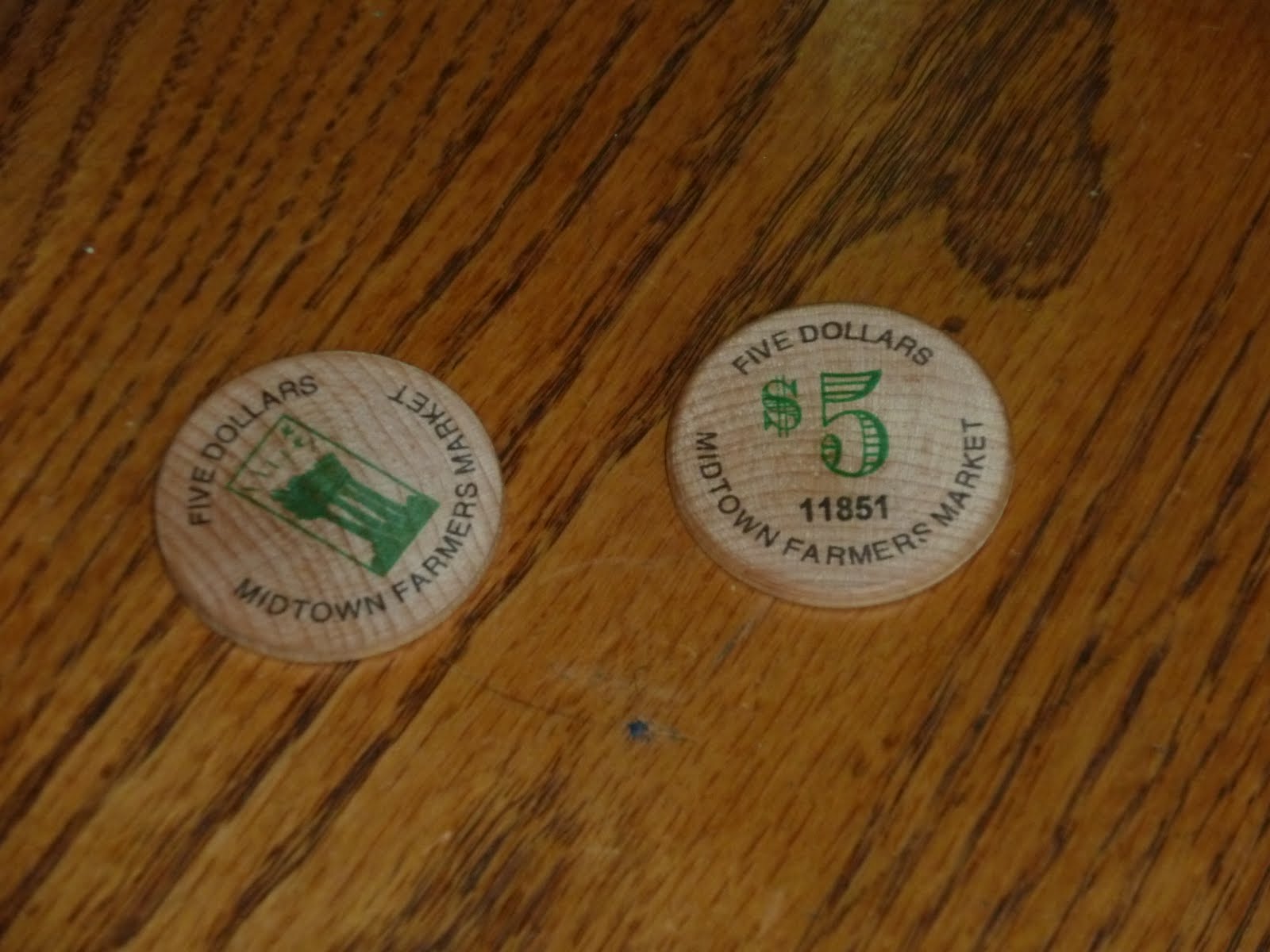
Another thing that many people don't know is that you can use EBT/Food Stamps at farmers markets During the AmeriYears, I didn't even know this! It is also great because the system is set up to accept EBT as well as major credit cards like Visa and MasterCard. You buy tokens in $5 increments and use it like cash. The farmers will give you cash back if there is change.

Peace!

Wednesday, June 9, 2010

Two - Grocery Co-ops

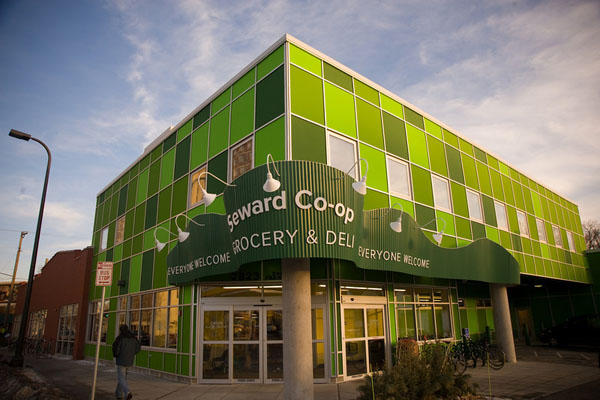
When Guthrie and I lived in Atlanta, there was only one co-op in the entire metro area! Every time Guthrie and I would be back to visit, I would beg him to take me to the Wedge or the fabulous new Seward co-op, as that is where I get all of my power. I truly love my co-op. I do almost all of my shopping there -- no need for Rainbow or even Target. Sometimes it's hard to make greener more sustainable decisions with every purchase you make, but shopping at the co-op helps make the decisions easier. The products usually have a lower carbon footprint, are well labeled so you know if they are local, and are often organic and/or fair trade. Guthrie and I ran out to the Seward Co-op to become members there. As a former member of the Wedge, I am so happy to back supporting my co-op.

Choose one near you --


The membership is usually around $80 and you are purchase class C stock. Though if you find you don't like the co-op experience (who wouldn't?) you can always sell back your shares and get your money back. Though perks vary by co-op, you usually get coupons, perks like 10% off one purchase every three months, bulk items at a discount, a vote for the board, class discounts, newsletters, and access other fun member-only events.

For more information on your Minnesota co-ops, organic gardening tips, recipes, events, etc check out this website:  Twin Cities Food Co-ops

Let me know if you ever want to carpool to Seward! Happy shopping! Peace!